What is a Trade for Print (TFP) Portfolio Shoot?
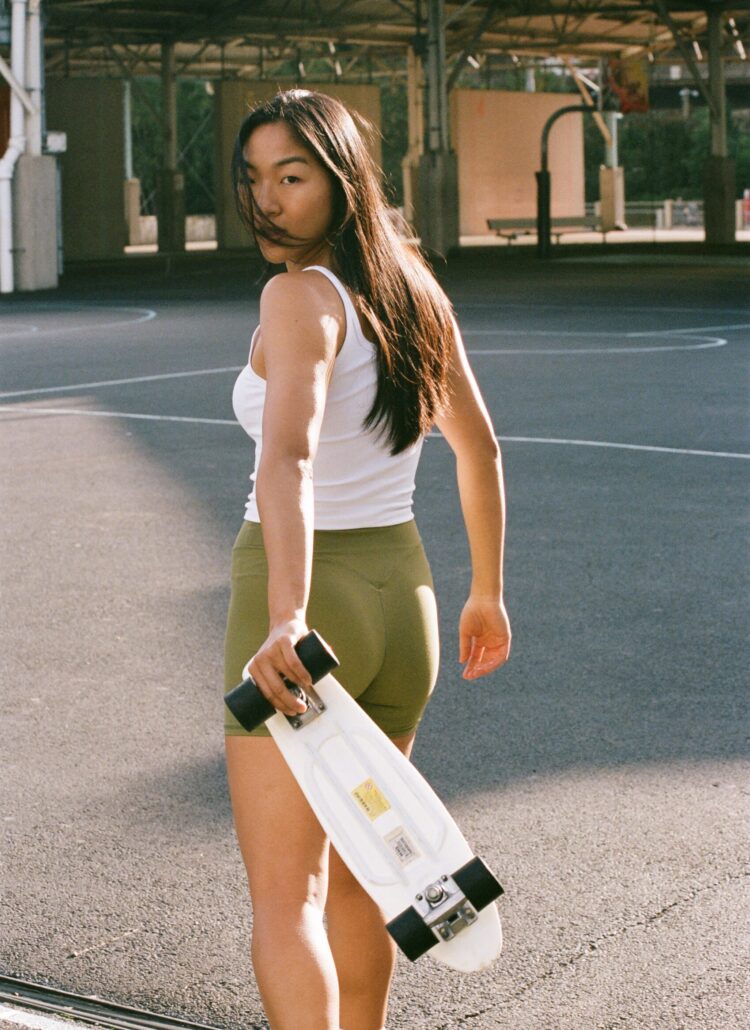
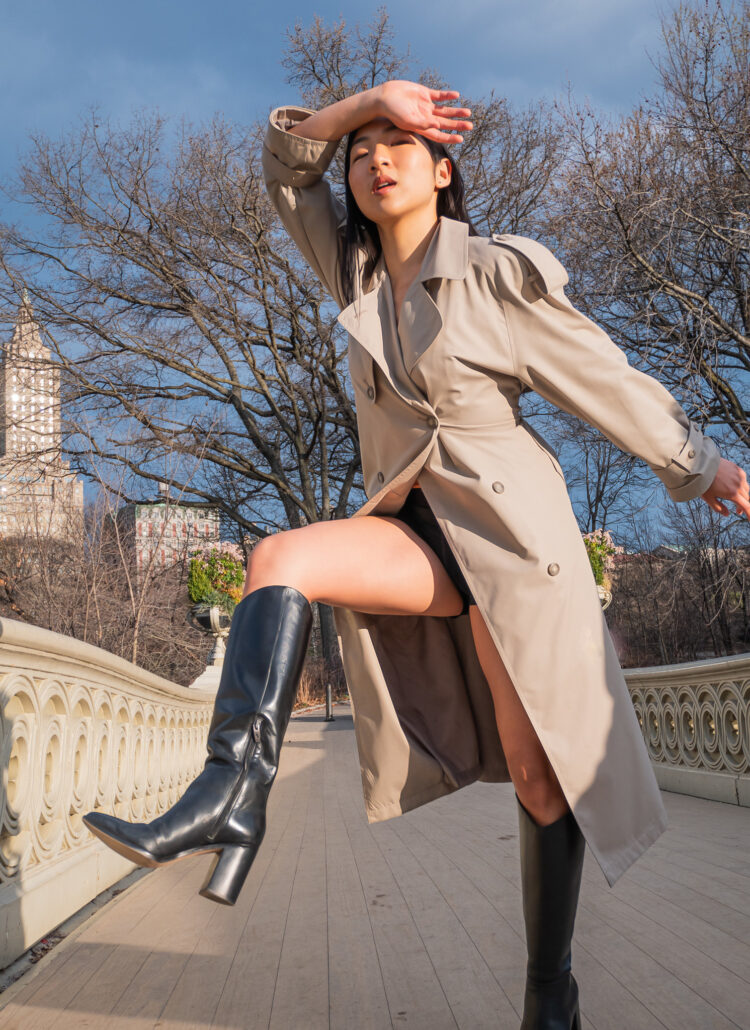
Trade for print shoots are creative shoots where the photographer and model collaborate with no monetary investment from either party. Both individuals partake in the shoot with the goal of building their portfolios.
A photographer will agree to TFP portfolio shoots to build their portfolio, to test creative ideas, to practice working with new techniques, or to work with new faces. TFPs are an extremely effective way to build your portfolio for free.
Some models build their portfolio by paying for test shoots, and some only with TFPs. I have done a mixture of both. Some of my best images have come from TFPs
How to find photographers in your area
I have collaborated on dozens of unpaid TFP shoots at this point, and here are some ways I’ve found success in finding a photographer. Anytime you find a potential photographer to shoot with, before reaching out or agreeing to a shoot, I’d recommend reviewing their Instagram to make sure their work matches the quality and style you’re looking for. This is something to keep in mind, though less of an issue early on in your career as you’re gaining experience in front of the camera.
Searching on Instagram
One of the best ways to source photographers for a TFP is by looking at models who have recently updated their portfolio with new images. It’s industry etiquette to tag whoever was involved in a shoot, so the photographer is almost always tagged in the photo. Sometimes models have paid for the test shoot, but it’s always worth reaching out to a photographer to see if they are willing to shoot a TFP.
Threads
Responding to a Photographer’s solicitation on threads
Threads is a busy platform for creatives looking to collaborate. If you search up “TFP Shoot + <your city>” you will find photographers who are looking to collaborate. Before reaching out, I’d recommend reviewing their Instagram. Make sure to cross-check on Instagram that this is a photographer which whom you would get good images.
Posting on threads
Another way to find photographers keen to shoot is by posting under the “test shoot” category on threads. Whenever I solicit photographers with my post, I add a few recent images from my portfolio, my current location, the types of creatives I’m looking to collaborate with, and reach out to anyone who comments that I would be interested in working with.
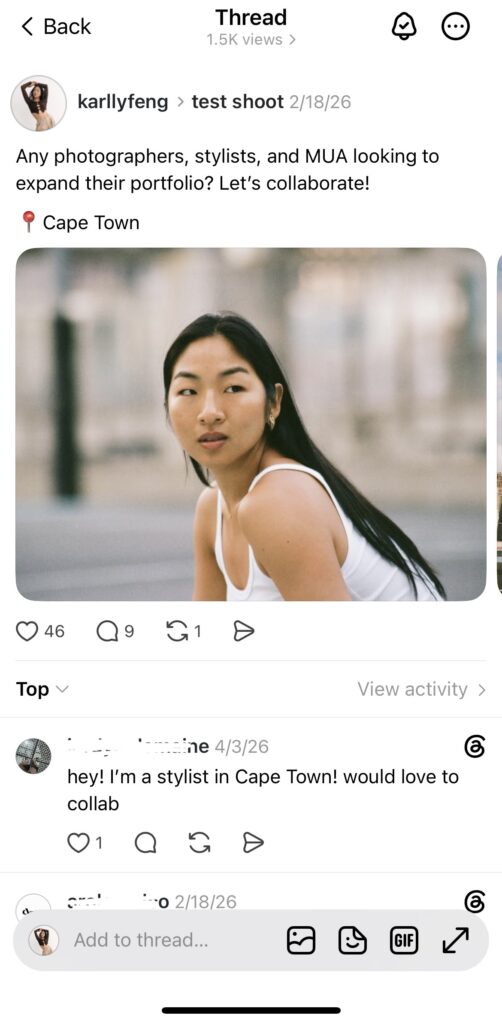
I use a lot of discernment when I post for a TFP collaboration on threads. While I appreciate photographers who reach out, not every editing style aligns with the type of images that I can add to my professional portfolio. Your mileage will vary.
Local Modeling and Photography Facebook groups
Many cities have local modeling and photography Facebook groups. You can solicit collaborations by posting in these groups or responding to photographers who are looking for models to shoot with.
Pitch a TFP shoot to a photographer you know personally
If you know anyone personally in your network who is a photographer, reach out to them for a shoot. They might be more likely to shoot with you if they know you personally. All of my earliest TFPs were with photographers I knew personally.
They provided me with portfolio images that not only improved my book, but also gave me the credibility to cold reach out to photographers I didn’t already know.
How to reach out to a Photographer for a TFP.
When reaching out to a photographer, I’m assuming you already have vetted the photographer, and they have images in a style you’d want to add to your portfolio. With that in mind, here is how I typically reach out to a photographer for a TFP.
Cold Reach Out
When reaching out to a photographer for TFP photography, I always follow them on Instagram before sending a message. I gauge interest by asking if they’re open to TFP collaborations, with a message like the following:
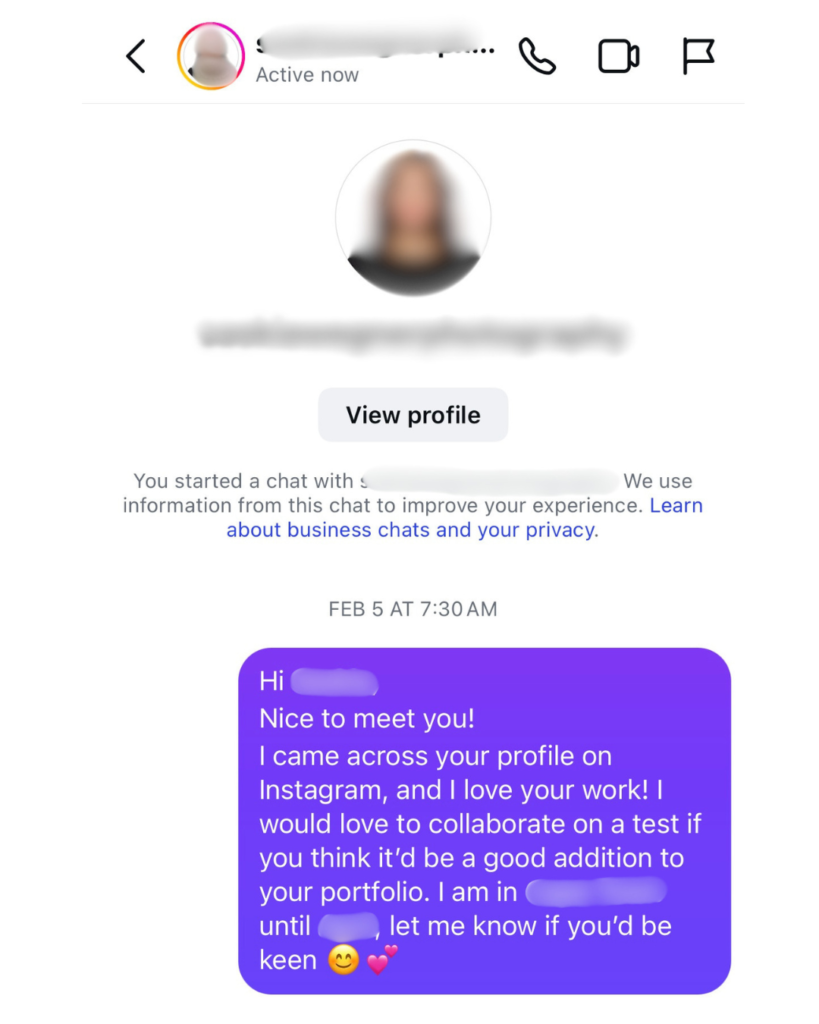
Be prepared for your message to be ignored, or replies saying they don’t do unpaid shoots. This is very common. Many photographers have a full inbox of models wanting to do TFPs. It’s a numbers game, so if you don’t get positive responses from the first round, curate a list of more up-and-coming photographers to contact.
You will get a higher chance of a response if your Instagram looks professional. Post your existing portfolio images, or if you don’t have one yet, post digital-like images of your face and body with minimal makeup and no filters. Your natural look is how photographers determine whether they want to add your look to their portfolio.
Pitching a concept
If a photographer responds back with interest, you should have an idea of the type of a concept you want to create with the photographer. Send them a moodboard with styling, posing, or background inspiration. This is very easy to create on pinterest, and might look something like the following:
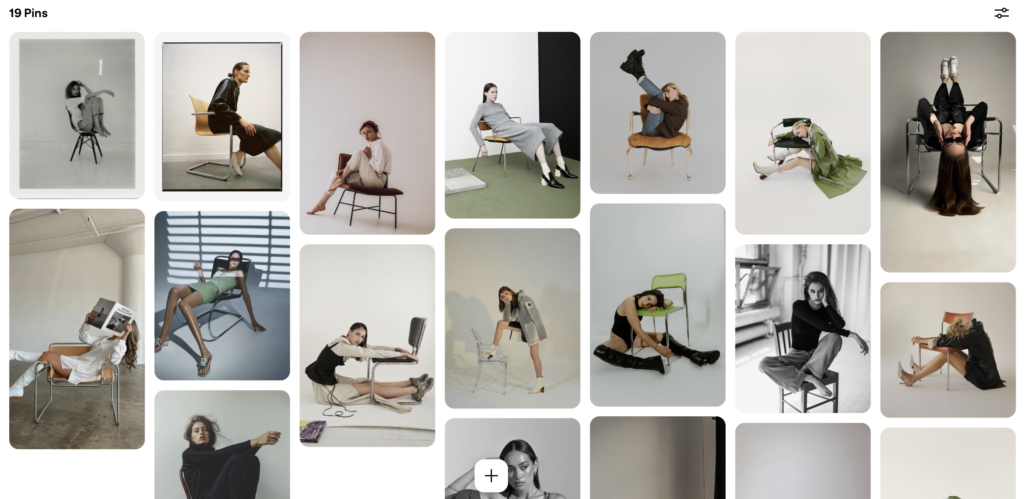
This shows not only your professionalism, but also is a way for you to direct the shoot to get images you know you will use in your portfolio.
I always ask the photographer if they have a concept they want to execute as well. For TFP shoots I typically aim for 2 looks, so this gives them the space to build out anything they want as well.
For a free TFP shoot, I always try to aim for at least 2 styling looks, with 2 different backgrounds. My goals for TFP shoots are to include them in my professional modeling portfolio, so having 6 usable images (3 from each look) from the shoot is considered a success to me.
Be Aware
When reaching out to photographers, I always 1. Check their Instagram, 2. Reach out through Instagram.
While I’m checking their Instagram, I keep an eye out for 2 things:
- Are the images they have in their portfolio ones that I’d want to emulate? Consider their consistency, editing style, and framing. If I wouldn’t want any images similar to those they have taken, I will not reach out for a TFP.
- What types of models does the photographer shoot? If the photographer only shoots female models that are styled in swim or lingerie, I will not reach out for a TFP.
Safety practices
Since the photographer is most likely someone you don’t know very well, it’s important to keep safety practices in mind while meeting with a stranger.
Bring a friend
If you are shooting in a studio or some enclosed private space, always bring a friend, or ensure there is a makeup or hairstylist also on set. Any professional in the industry knows how important the model’s comfort is, so if they react poorly to your request to bring a friend, this is a red flag.
Shoot in public
If a friend is unable to accompany you to the shoot, and there isn’t a third creative on set for the shoot, make sure you shoot in a public area. This can be at a park, on a street, or anywhere where you will see people in the vicinity. Having the option to walk away if you feel uncomfortable will give you peace of mind.
Tell someone where you will be
Before going to a shoot, tell a friend who you’re shooting with, who will be on set, and where you will be shooting. This is a precautionary safety measure, especially when working with someone for the first time. Most shoots are completely professional, but it’s always smart to make sure someone knows where you are and who you’re with.
Discuss Expectations
Everyone involved in the shoot should understand the concepts, wardrobe, location, and number of final edited images to be delivered before the shoot day to avoid any misunderstandings.
Post Shoot Etiquette
Post shoot, the photographer will send you all of the images they took for you to pare down a few to edit. They will most likely give you a number of final images they are willing to do final edits on. Try to send your picks back as quickly as possible out of respect for their editing time.
When the photographer sends you the final edited images, post them to Instagram without altering them, and tag them.
Key Takeaways
TFPs are a great way to build your portfolio for free. Before approaching photographers, make sure these photographers can give you the images you need for your portfolio.
When meeting photographers for the first time, make sure you follow safety practices, like bringing a friend, and/or shooting in public. Make sure you post the final images to instagram so the photographer gets credited. A strong TFP collaboration should feel mutually beneficial and help both creatives grow their body of work.
Building a portfolio takes time, consistency, and networking. The more experience you gain through TFP portfolio shoots, the easier it becomes to develop connections, improve your confidence and movement in front of the camera, and create images that open doors to future opportunities.
Leave a Reply